
Chronic Venous Insufficiency
Chronic venous insufficiency (CVI) is a progressive condition where the one-way valves in your leg veins weaken or become damaged. Blood leaks backward and pressure builds in the veins, leading to swelling, discomfort, and a range of vein-related conditions.
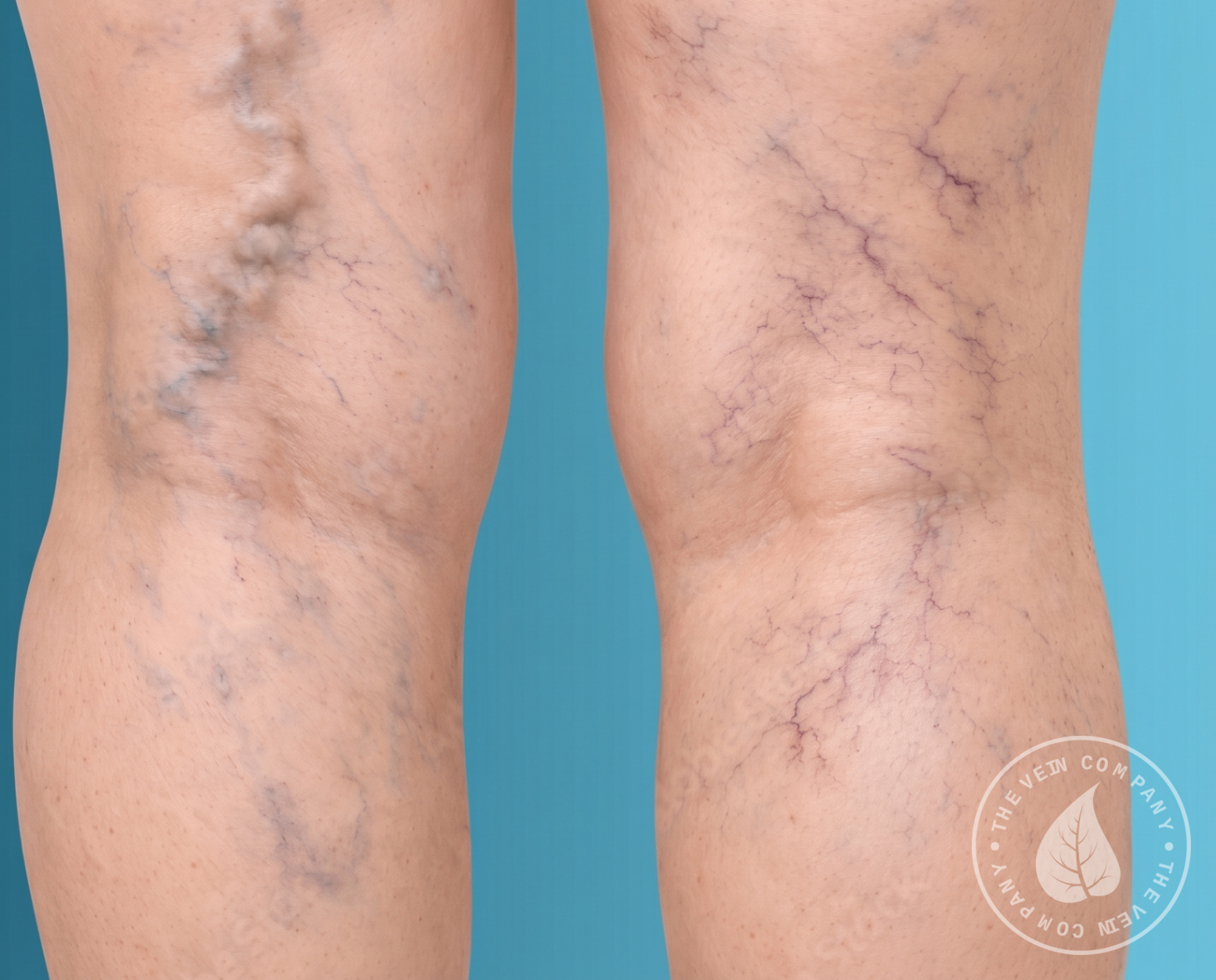
What CVI can look like
Bulging veins, swelling, and skin discoloration caused by
chronic venous insufficiency.
Contains clinical photography | click to expand | © The Vein Company
Symptoms of Chronic Venous Insufficiency
Do you have one or more of the following?
Early Signs
- Leg heaviness or fatigue, especially at the end of the day
- Swelling in the legs and ankles after prolonged standing or sitting
- Visible varicose or spider veins
- Itching, burning, or aching in the legs
Advanced Signs
- Brown or reddish skin discoloration on the lower legs
- Hardened, thickened, or leathery skin texture
- Restless legs or night cramps
- Non-healing wounds or ulcers near the ankle
Causes of Chronic Venous Insufficiency
- Heredity
- Pregnancy
- Prolonged standing or sitting
- Obesity
- Aging
- Prior blood clots (DVT)
- Leg injuries
When Should You See A Doctor?
If you have persistent leg heaviness, swelling, visible veins, or skin changes that don't improve with elevation or compression, get evaluated. Early diagnosis with duplex ultrasound is the most effective way to prevent progression.
Chronic Venous Insufficiency Treatments
CVI is highly treatable with minimally invasive, in-office procedures. Treatment is tailored to the severity of valve damage and the specific veins involved.
Endovenous Ablation
Catheter-based therapy (radiofrequency or laser) closes the diseased vein. Blood reroutes to healthy veins, relieving pressure and symptoms. Minimally invasive, performed in-office, with most patients returning to normal activity the same day.
Sclerotherapy
Injection of a solution directly into smaller diseased veins, causing them to collapse and be reabsorbed by the body. Used for spider veins, reticular veins, and residual varicose veins.
Compression Therapy
Graduated compression stockings support the calf-muscle pump and reduce venous pressure. Used as standalone therapy or alongside procedures.
Why it matters
Left untreated, CVI is progressive. Mild swelling can advance to skin changes, leathery hyperpigmentation, and non-healing venous ulcers. Early treatment of the underlying valve dysfunction prevents these complications.
Frequently asked questions
Chronic Venous Insufficiency treatment near you
We treat chronic venous insufficiency at all of our locations across East Tennessee and Southwest Virginia.