
Leg Ulcers & Skin Changes
Many people are told that skin changes or non-healing wounds on the lower legs are “just part of aging” or a skin problem. They’re often something more — advanced signs of vein disease. The good news: when the underlying cause is treated, most leg ulcers can heal.
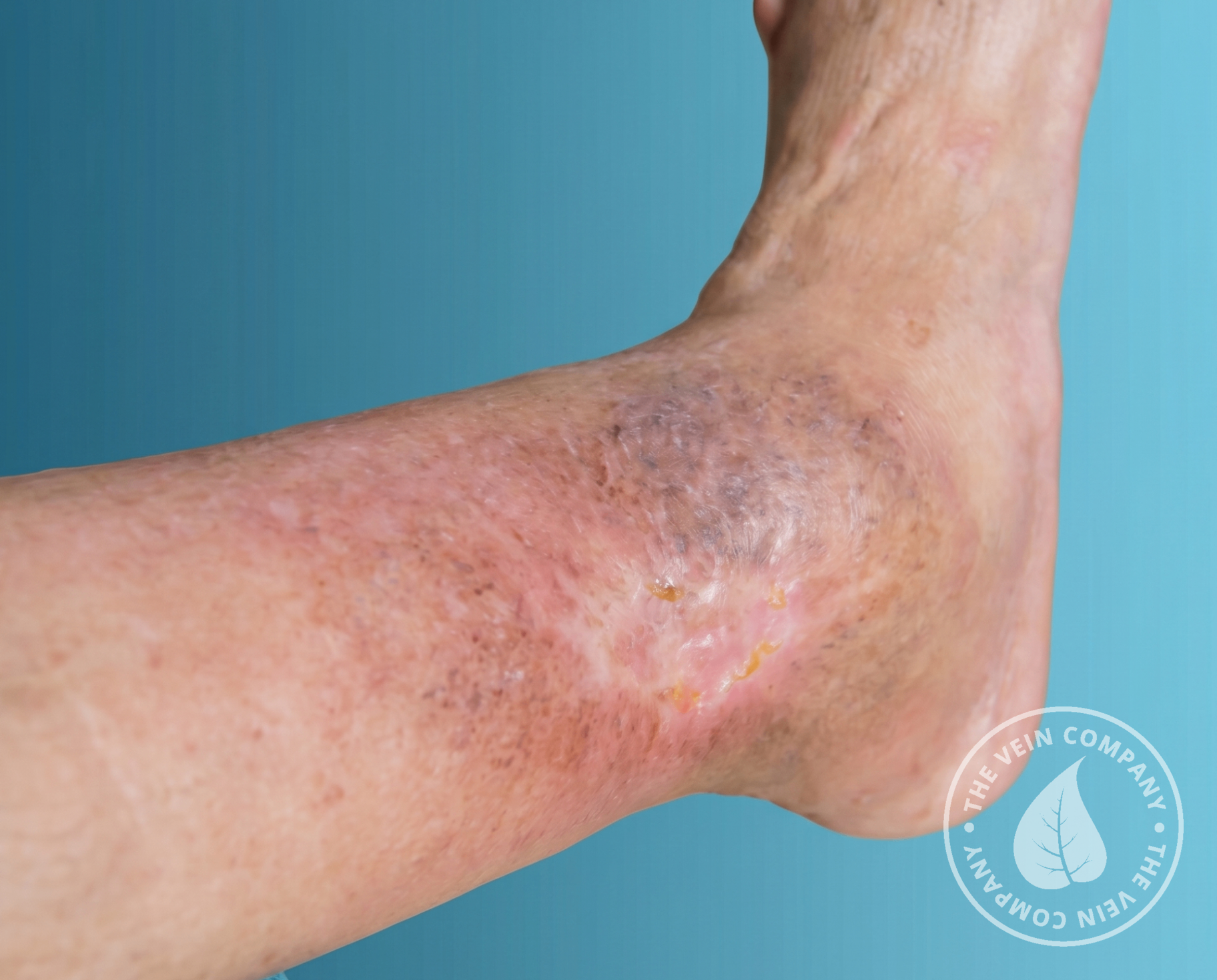
Leg ulcer not healing?
Example of a venous leg ulcer caused by untreated vein disease.
Contains clinical photography | click to expand | © The Vein Company
Symptoms of Leg Ulcers & Skin Changes
Do you have one or more of the following?
Early Signs (the skin changes)
- Darkening or brown discoloration on the lower legs
- Itchy, flaky, or eczema-like skin patches
- Hardened, thickened, or leathery skin texture
- Deepening of natural skin folds around the ankle
Later Signs (the ulcer stage)
- Open or slow-healing sores near the ankle
- Pain or tenderness around the wound
- Recurrent wounds that heal and reopen
- Increased risk of skin infections
How we treat leg ulcers & skin changes
Duplex ultrasound — map the underlying vein dysfunction
Minimally invasive vein treatment — catheter-based therapy or injection to correct the source of high pressure
Coordinated wound care — alongside vein treatment for fastest healing
Professionally fitted compression — daily wear during healing, removed at night, replaced every 3–6 months
Why it matters
Venous ulcers can take months to heal and frequently recur without addressing the underlying vein disease. Treating the root cause—malfunctioning veins—dramatically improves healing and reduces recurrence.
When should you see a specialist?
Don’t wait for an open wound. The earlier we evaluate skin changes, the more options we have — and the less likely you are to develop an ulcer at all.
See a vein specialist if you notice:
Frequently asked questions
Leg Ulcers & Skin Changes treatment near you
We treat leg ulcers & skin changes at all of our locations across East Tennessee and Southwest Virginia.